Legwork — Vertical one: Shopify
Your First Ten Hires
Building an AI operations team for a one-person Shopify store
Ten operational roles, handed to a language model one at a time. What each handover is worth, what it costs to run, where it fails, and the point at which you should take the work back. Written against one real store over twelve months.
$29USD
Founding price. $49 from September 15, 2026.
PDF, 184 pages, 15 chapters, 11 figures. Instant download through Gumroad. 30-day refund.
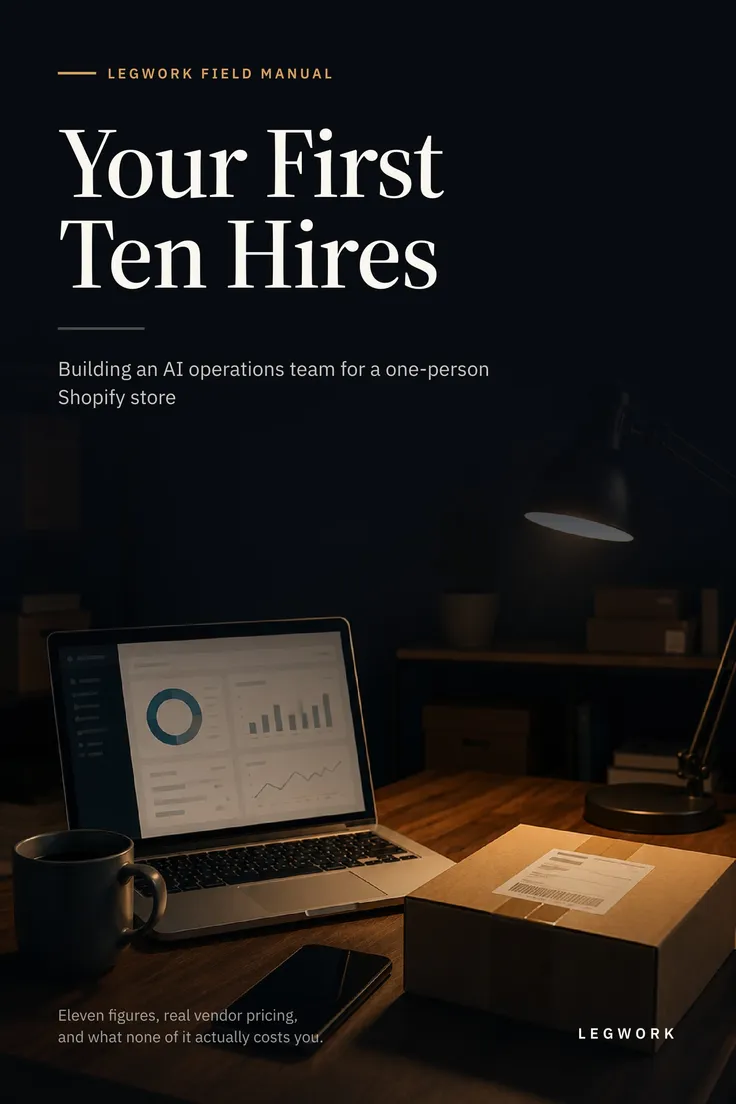
First edition. Buyers get every update to this edition.
The problem
It is 11:40 on a Tuesday night. You are answering the fourteenth message of the day about an order that shipped on Friday, and the tracking number is in the email you already sent. The supplier reply you needed at 4pm is still unread. Tomorrow’s product page is not written. None of this is hard. All of it is yours.
This is not a volume problem, and more discipline will not fix it. A store your size generates the operational load of a team of about ten and hands it to one person. The standard advice is to hire, and the standard advice is right, and you cannot afford it. So the work stays where it is, and the parts of the business only you can do get done at midnight or not at all.
This book is about the third option, treated seriously. Not “automate your store” and not “use AI to 10x your output”. Ten specific roles, handed over one at a time, each with the prompt, the wiring, the monthly cost, the ways it fails, and an honest account of the three that are not yet worth doing.
What is inside
3 parts, 15 chapters. Part two is one chapter per role and is the bulk of the book.
Part 1 Setting Up the Office Show 3 chapters Hide
Before any hire, pick the stack and set up the workbench properly. Three chapters on tools, settings, and the platforms that move work between them.
- 01
The Stack
Which general assistant to pay for, and what none of them will do.
- 02
Your Workbench
Setting one up properly, and the settings almost nobody changes.
- 03
Automation Platforms
Zapier, Make, n8n — what each counts, and where the gap opens.
Part 2 The Hires Show 9 chapters Hide
Nine operational roles, one chapter each. What the hire does, how to wire it, what it costs to run, and where it fails.
- 04
The Morning Briefer
Yesterday's numbers on your phone before the kettle boils.
- 05
The Support Agent
It answers the question you've answered a thousand times.
- 06
The Listing Writer
Product copy faster than you can write it, without a penalty.
- 07
The Discoverability Engineer
Making your product data legible to the systems that recommend.
- 08
The Ad Producer
Enough creative that the platforms have something to work with.
- 09
The Email Team
The right message when something happens, without you noticing.
- 10
The Bookkeeper
The numbers that tell you whether you're actually making money.
- 11
The Night Watchman
Tells you when something's wrong, and stays quiet otherwise.
- 12
The Returns Clerk
Handles the return requests, so January doesn't eat November.
Part 3 Keeping Them Honest Show 3 chapters Hide
Handing work over is the easy part. This is the part about silent failures, real prices, and the things nobody knows yet.
- 13
When Automations Break Silently
The failure you won't notice, and the alert fired by silence.
- 14
What This Actually Costs Free chapter
Three pricing models, the named traps, and a realistic stack. This is the free chapter.
- 15
What Nobody Knows Yet
Things that will change, and things nobody actually knows.
15 chapters, 3 parts, 11 figures. Roughly 23,000 words.
What makes it different
01
Every figure is labelled by evidence type
All 11 figures carry a tag: measured, vendor-published, self-reported or estimate. The sourcing note at the back of the book explains what each label can bear. Nothing is presented as harder than it is.
02
It tells you what the tools actually cost
Chapter 14 — the free one — puts the headline price and the real price in one place. Three pricing models, the named traps, and a realistic stack. Prices checked July 2026.
03
It says what nobody knows
Chapter 15 is titled that, literally. Things that will change, and things nobody actually knows. Where the evidence is one store rather than fifty, the book says one store.
Three of the 11 figures
Shown at the size they appear in the book, with the evidence label and the source line intact. This is what the rest look like.
Figure 3 What each handover costs per month
Measured
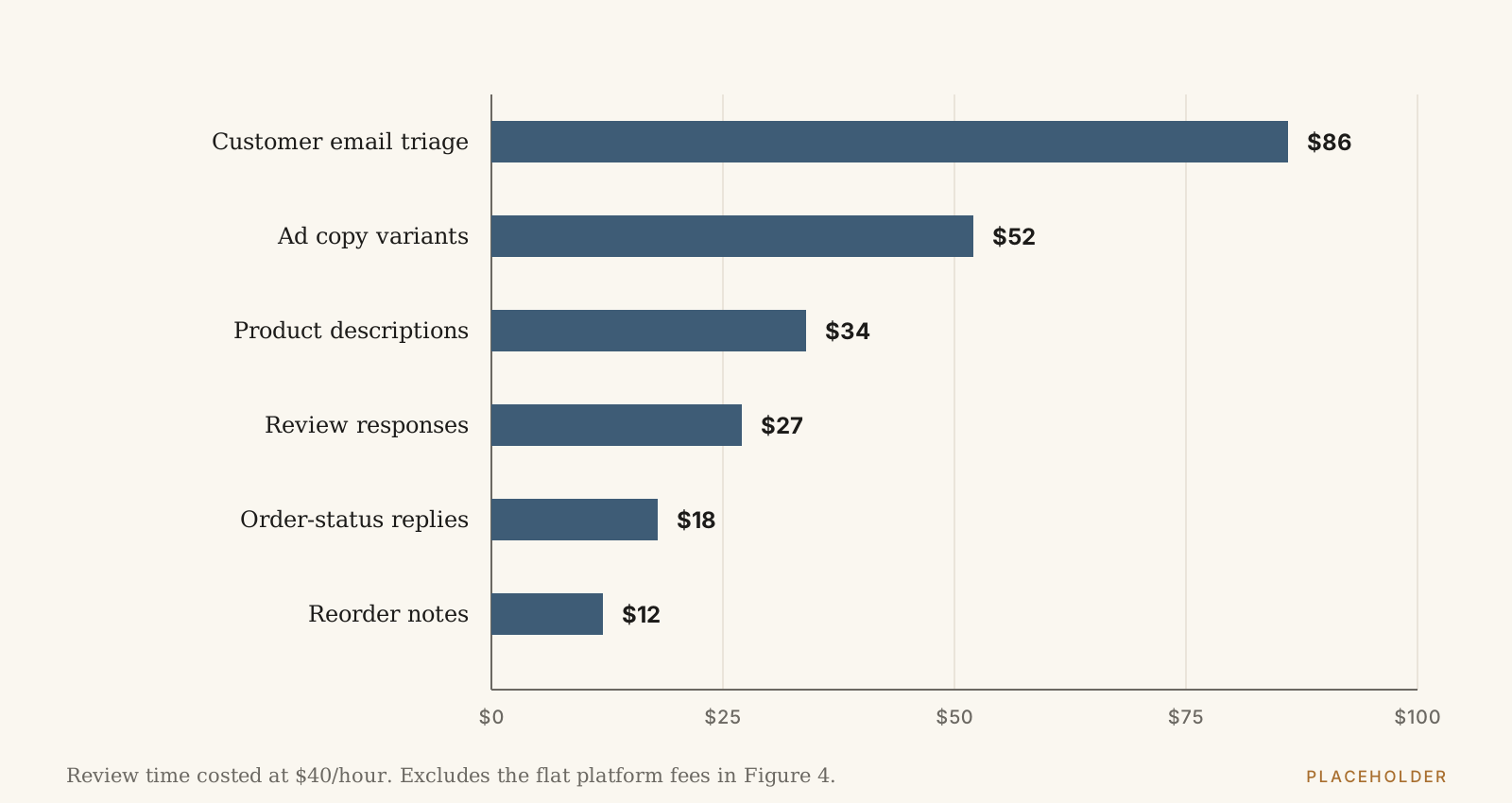
Customer email triage costs seven times what order-status replies cost, and it is the handover most people make first.
Source: Twelve months of invoices from one store, reconciled line by line
Figure 7 Where the agent fails, and what it costs
Measured
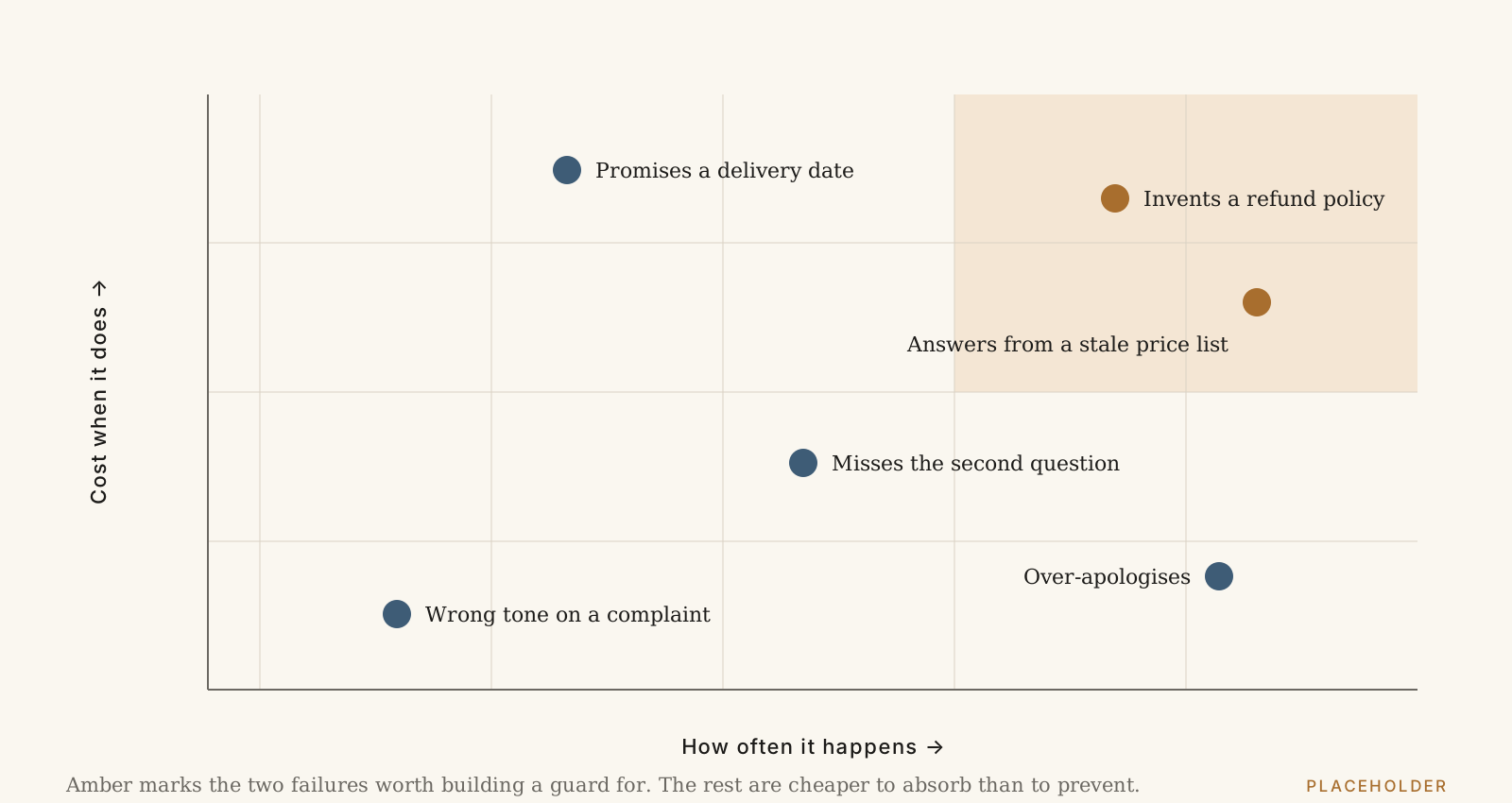
Only two of the six failure modes are worth building a guard for. The other four cost less to absorb than to prevent.
Source: 1,412 conversations graded by hand, plus an estimated cost band per failure
Figure 11 Weekly hours, before and after
Self-reported
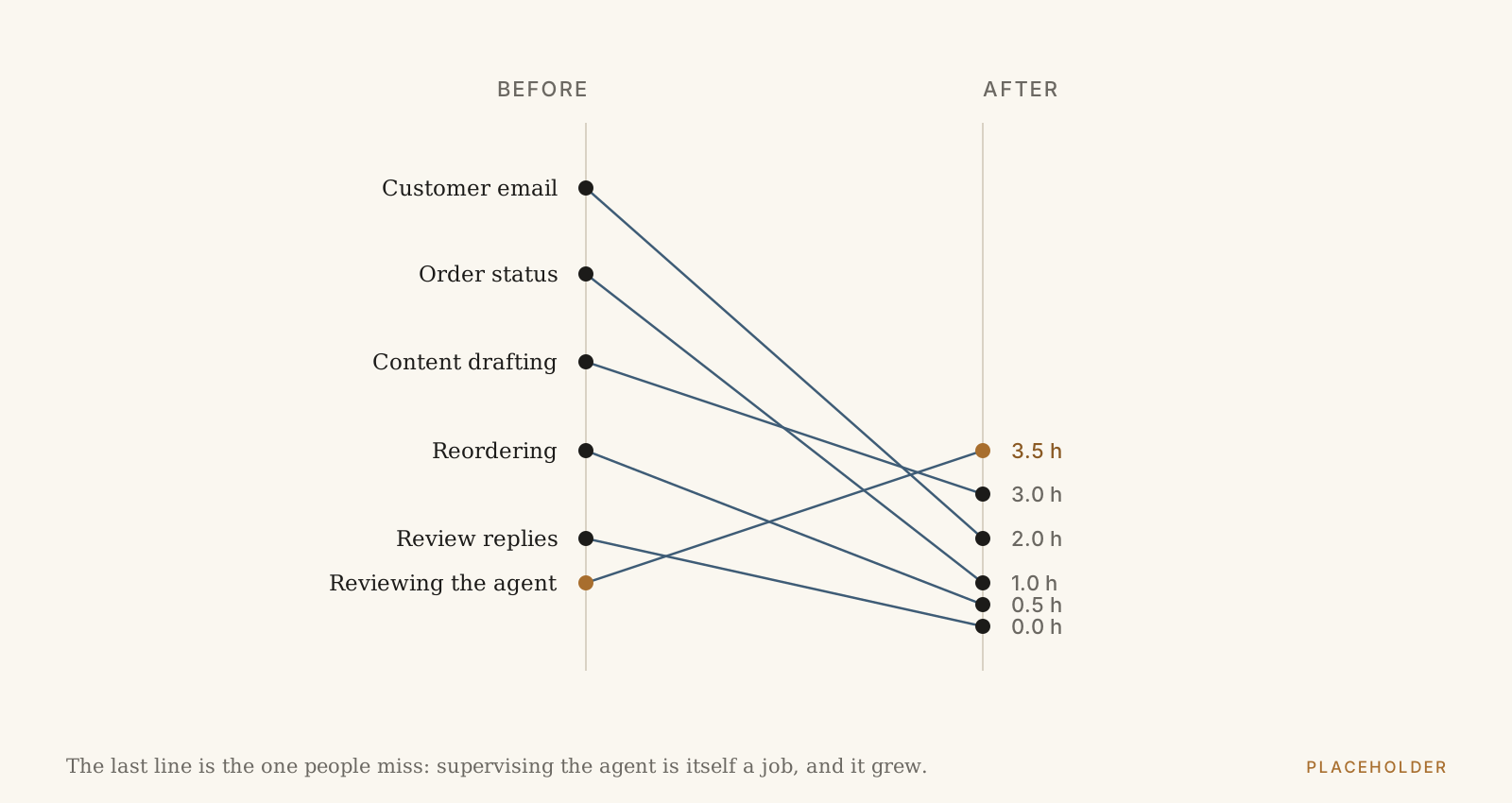
Five lines go down. One goes up: supervising the agent is itself a job, and it grew by two and a half hours a week.
Source: Eight weeks of time logs either side of the change, kept by the store owner
Read chapter 14 free
“What This Actually Costs” is the chapter no vendor will write — three pricing models, the named traps, and a realistic stack. Reproduced in full. We send it as a PDF, once, to the address you give us.
This form is not connected yet. Set
PUBLIC_EMAIL_ENDPOINT
in the build environment and redeploy.
Until then the field is disabled rather than quietly dropping addresses.
Prefer to see the page first? What is in chapter 14.
Price
Founding price
$29USD
PDF, 184 pages. Updates to this edition included. No subscription, no account, no upsell.
Checkout is Gumroad. 30-day refund, no questions.
Why it is cheaper now. The first edition is published before the follow-up research is finished, and early buyers are the ones who tell us what is wrong with it. The price goes to $49 on September 15, 2026. Buy before then and you keep every update to this edition at no extra cost, including the corrections those early buyers cause.
Questions
Is this a book about prompts?
Partly. Every hire comes with the setup we actually run. But the prompt is maybe a third of each chapter. The rest is the wiring, the cost, the failure modes, and the point at which you should take the work back.
Will this be out of date in six months?
Parts of it. Model names and prices move fastest, which is why every figure carries a date and an evidence label, and why chapter 14 is structured so you can re-run it against your own invoices. Buyers get updates to the PDF for the life of the edition at no extra cost. Prices in the free chapter were checked July 2026.
Do I need to be technical?
You need to be comfortable configuring a Shopify app and copying values between two browser tabs. There is no code in the book. The automation chapters describe Zapier, Make and n8n click by click.
What if I do not use Shopify?
Roughly two thirds of the book is platform-agnostic: the roles, the supervision procedure and the cost model. The integration chapters are Shopify-specific. If you are on WooCommerce or BigCommerce you will be translating, not rewriting.
What tools does this assume I am paying for?
A model subscription, a helpdesk, and an email platform. Chapter 14 prices the stack three ways and names the traps. Nothing in the book requires the expensive tier.
Can I get a refund?
Yes, within 30 days, through Gumroad, no questions and no form to fill in. If the book was not useful we would rather have the refund than the money.
Something not answered here? Write to legwork.guide@gmail.com and a person will reply.